How Fuel Prices and Travel Trends Affect RV Park Occupancy
CC0, via Wikimedia Commons
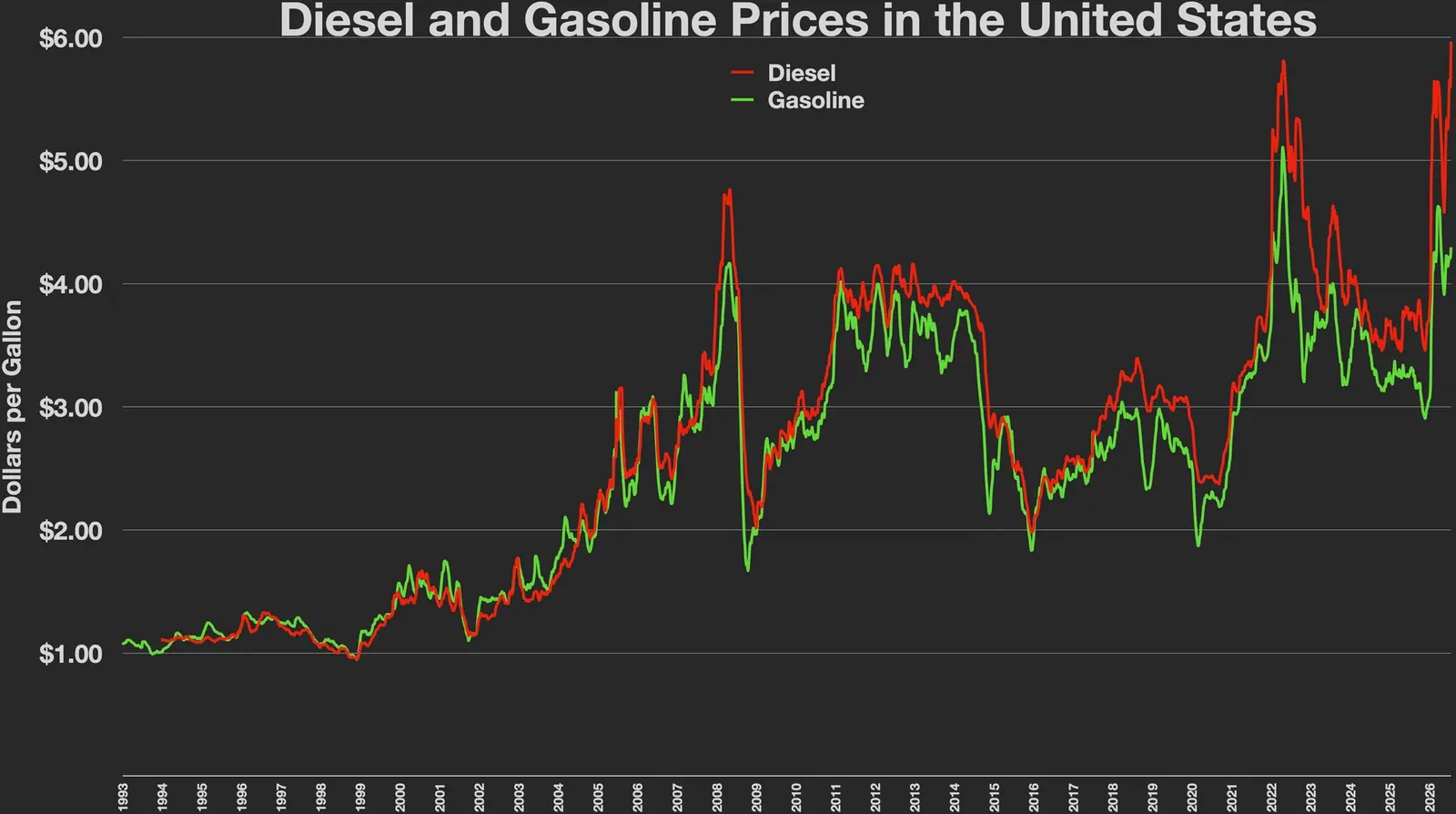
Fuel prices get blamed for every soft occupancy month, but they are a secondary factor, not the main driver. The bigger forces are who is traveling, how far they go, and what they consider a vacation this year.
Does gas price actually move RV park occupancy?
Yes, but at the margins. Studies and industry surveys after past price spikes generally show trip-length shortening before trip cancellation. A family that planned a 1,500 mile loop trims it to 400 to 600 miles and stays closer to home. That favors parks within a few hours of major metros and can hurt destination parks that depend on long-haul travelers.
How much does a $1 per gallon swing actually matter?
For a typical towable rig getting 8 to 12 miles per gallon, a $1 jump adds roughly $80 to $125 in fuel cost per 1,000 miles. That is real money, but it is small compared to total trip cost once you add campground fees, food, and activities. Most RVers absorb it by shortening trips or driving a bit slower, not by staying home entirely.
What travel trends matter more than fuel price right now?
Three show up repeatedly in occupancy data across the industry:
- Remote and hybrid work extending average length of stay, especially at parks with decent connectivity
- Growth in younger RV owners traveling in shorter bursts around work schedules instead of the old retiree snowbird pattern
- Rising preference for parks with amenities and a reason to stay put, rather than pure pass-through stops
These trends tend to matter more to year-over-year occupancy than a 20 to 30 cent swing in gas prices.
Does the type of RV park change how exposed it is to fuel prices?
It does. A park near a highway corridor that lives on overnight transient traffic is more sensitive to fuel costs and general driving appetite. A destination park near a lake, national park, or recreation draw is less sensitive because travelers plan that trip regardless and treat fuel as a fixed cost of the vacation they already decided to take. Investors should know which category a park falls into before assuming fuel price is a real risk factor.
What about EV adoption and electric tow vehicles?
This is a longer-term question, not a this-year question. Electric trucks capable of towing a heavy travel trailer are still limited in range and charging infrastructure for towing use. Expect this to be a non-factor for occupancy for at least the next 5 to 10 years, though it is worth watching as charging networks expand along interstate corridors.
How should an investor factor this into underwriting?
Do not build a pro forma that assumes fuel prices stay flat or that ignores them entirely. A reasonable approach is to stress test occupancy and average length of stay under a modestly higher fuel cost scenario, then check whether the park's drive-time radius and amenity mix would likely hold up. Parks that depend heavily on long-distance transient traffic deserve a more conservative occupancy assumption than parks serving a strong regional drive market.
Still stuck?
If you are evaluating a specific park and want help thinking through its fuel and travel-trend exposure, drive-time radius, and seasonal mix, that is exactly the kind of underwriting question Invest With Zac works through with investors before they commit capital.
Curious about RV park investing?
Learn how the asset class works before you put a dollar into it.
Learn more